A Home Office That Works With You
You do not need a spare room or expensive furniture to work well at home. Light, posture and a clear boundary between work and the rest of life matter far more.

2 min read
When so many of us started working from home, the first instinct was to buy things: a monitor arm, a ring light, a chair with more adjustments than a car seat. Some of those purchases helped. Many ended up as clutter around a desk that still did not feel right.
The workspaces that actually work tend to get a few basic things right, and none of them require a big budget.
Follow the light
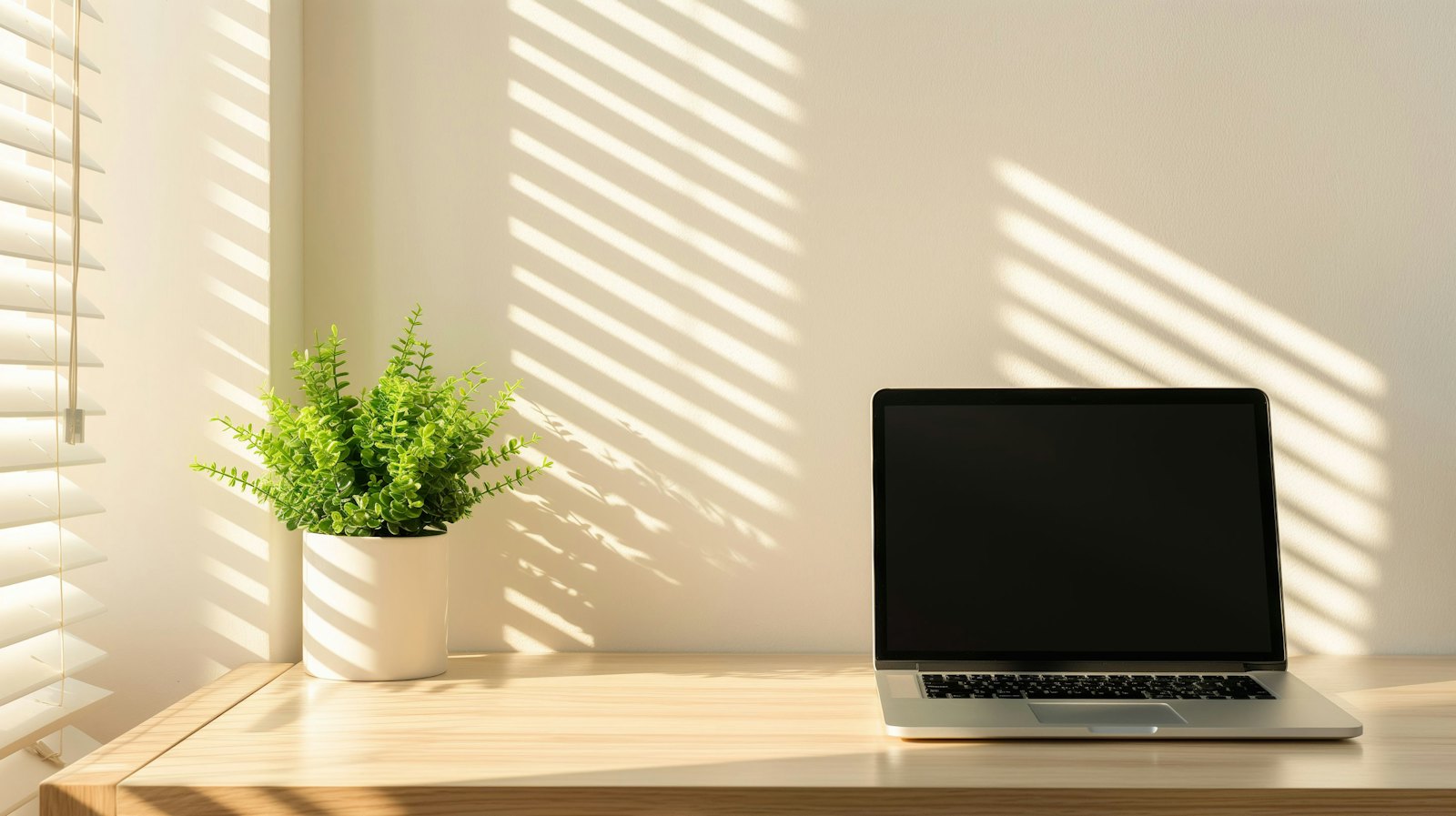
Put your desk where the daylight is, ideally side-on to a window so the light falls across the desk rather than into your eyes or onto your screen from behind. Natural light keeps you alert during the day and makes it easier to switch off in the evening. A warm lamp for late afternoons does the rest.
Set yourself up for the long hours
Raise your screen so the top edge sits around eye level. A stack of books works as well as any stand.
Keep your elbows at roughly ninety degrees, with your feet flat on the floor or on a footrest.
Use a separate keyboard and mouse if you work on a laptop all day. Your neck will thank you.
A good workspace is one you stop noticing after five minutes.
Make a clear boundary
The hardest part of working from home is not starting, it is stopping. If you do not have a separate room, create a ritual that marks the end of the day. Close the laptop and put it in a drawer. Fold away the desk. Light a candle. Go for a short walk around the block, a commute in miniature.
Finally, give the space one thing that has nothing to do with work: a plant, a print you love, a small object from a trip. A desk should be somewhere you are happy to sit, not just somewhere you have to.